
Beyond «helping» or «not caring about» them: Teaching women in developing countries at an american university
Abstract
Au-delà de «aider» ou «ne pas se préoccuper» avec elles : enseigner sur «Femmesaux pays en développement» dans une Université aux États-Unis Cet article constitue une réflexion sur les défis posés par linternationalisation ducurriculum sur «Women Studies» aux États-Unis, concrètement, sur mon expérience denseignersur «Femmes aux pays en développement» à lUniversité de San Francisco, uneuniversité des pères jésuites, avec la mission explicite de promouvoir la justice social dupoint de vue global. Un des majeures défis denseigner ses matières consiste dans le risquede renforcer lethnocentrisme et lessentialisme, reproduisant se que Chanda Mohantyappelle «La différence du Tiers-Monde». Ont reprendra lappel de Mohanty a une «solidaritéféministe non-colonisatrice et transfrontière», aussi bien que la typologie des formesde solidarité, de Peter Waterman, cherchant à débattre les approches des étudiants authème des «Femmes aux pays en développement» et les formes de solidarités, conscientesou implicites, présentes dans les théories sur les femmes/genre et développement/globalisationétudiées dans mes leçons. Mots-clés femmes et développent, théorie féministe, féminisme et solidarité postcolonial, solidarité international The triumph of neoliberal globalization since the early nineteen-nineties has generated a growing interest in international studies on the part of scholars in most, if not all, academic disciplines in the United States. Along with a plethora of new books on globalization from economic, political, sociological and cultural perspectives, there has been an increasing demand for «internationalizing» higher education curriculum in the United States. Like most departments and programs, Womens Studies programs have also gone «global». In fact, since the mid-1990s, Womens Studies programs have received support from private funding agencies, such as the Ford Foundation, to redesign and create new courses aimed at «internationalizing the study of women in the United States» (Rosenfelt, Lay, and Monk, 2002: 2). This new trend has opened up a unique opportunity to build a critical feminist curriculum bridging multiculturalism and internationalism, that is, a curriculum attentive to the intersectionality of gender, class, race and sexuality within globalized and interdependent local contexts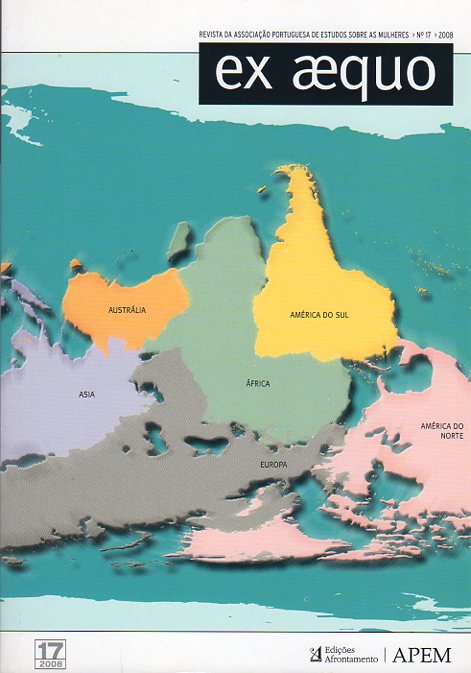
Downloads
Published
2008-06-01
Issue
Section
Dossier: Vozes de mulheres do Sul
How to Cite
Beyond «helping» or «not caring about» them: Teaching women in developing countries at an american university. (2008). Ex æquo, 17(17). http://172.233.59.247/exaequo/article/view/809